
Tears of Trees
The gummy stuff that trees produce is enormously useful to people
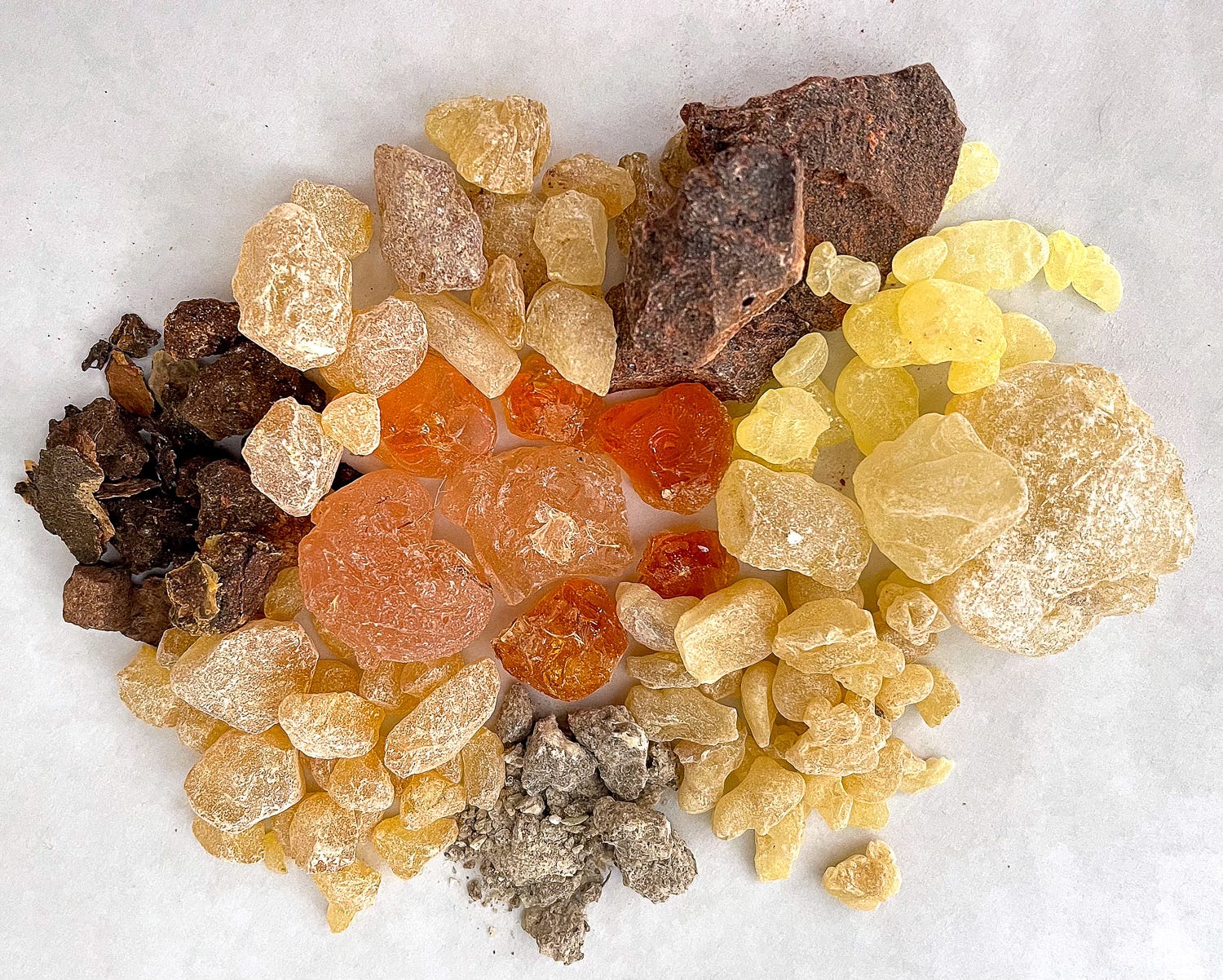
Trees produce thousands of chemicals, mostly in their own defense. Unable to flee predators, pests, and pathogens, they instead evolved chemical weapons. Many trees produce materials that begin as liquids but, on exposure to air harden either into thick sticky materials we call gums, or hard, brittle resins.
The picture shows a few gums and resins: gum arabic (North Africa), gum rosin (US), Chios mastiha (Southern Europe), Damar resin (East Indies), amber (Baltic), dragon’s blood (Indonesia), Frankincense (Oman), white copal (Indonesia), Mayan copal (Mexico), benzoin (Indonesi), myrrh (Ethiopia).
These and many other gums and resins have two things in common: they are economically very important; and they are largely harvested by hand from the surface of trees.
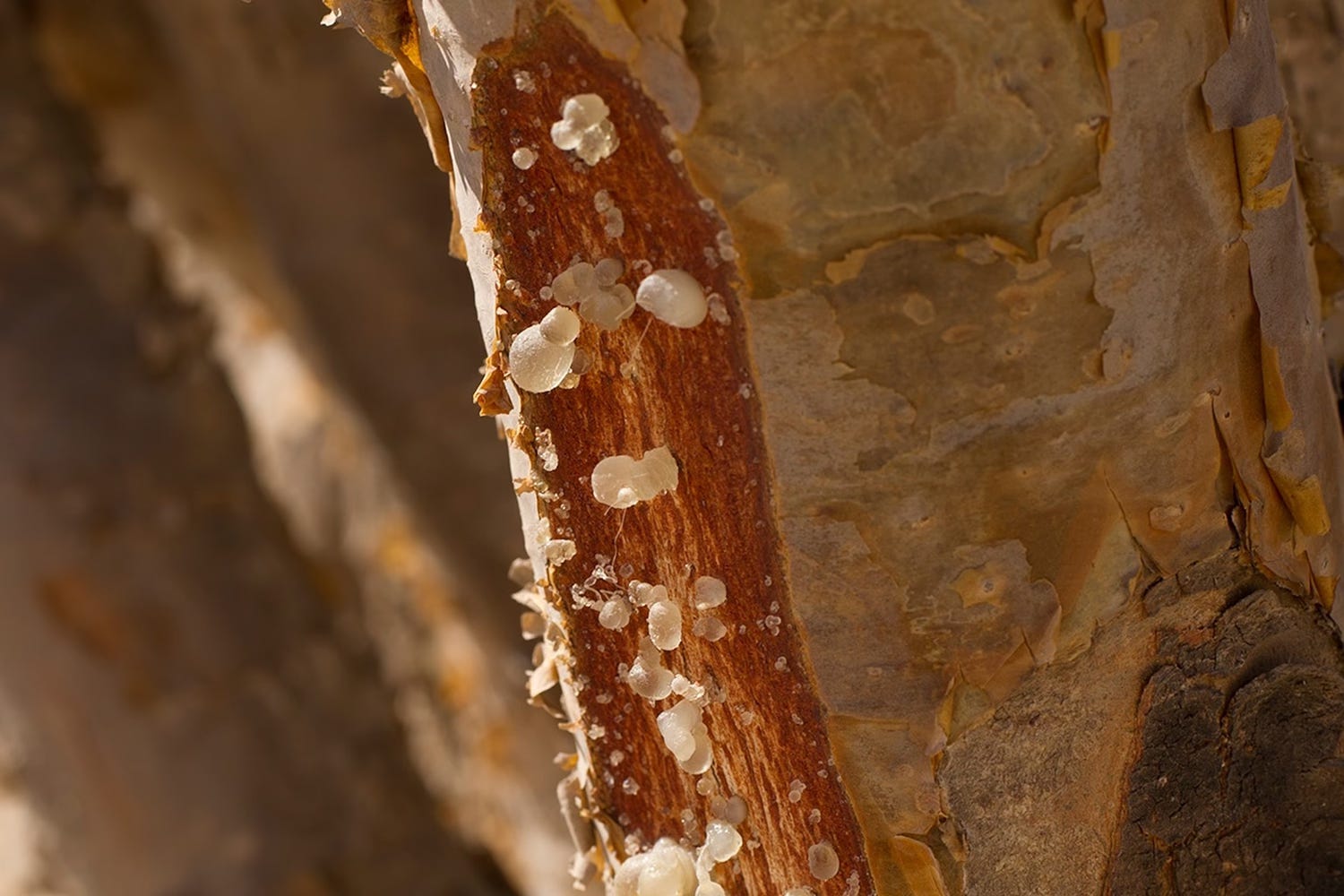
A harvester wounded the bark of this Boswellia tree. Liquid frankincense seeps from the wounds and hardens into tears, which are picked by hand. Source: National Geographic.
It is clear why these tears are important to the tree, providing defense against insects and pathogenic fungi. But why are these substances so valuable to us? To be effective defenses, gums and resins have to contain chemicals that are toxic to pests and pathogens. They are packed with potent chemicals. Many of these chemicals are powerful antioxidants. They are, therefore useful in medicine. Many of the tears of trees were used in traditional medicine, going back thousands of years. Modern pharmacology tells us that almost all these traditional medicines have anti-cancer, antibiotic, antihelminthic, and other useful properties. Some of them have wonderful odors and are used in incense, perfumes, and cosmetics. Today, tree gums and resins are at the heart of a huge number of useful pharmaceutical, cosmetic, and odorants.
The majority of these tears are wild collected or semi-domesticated. Many of them, such as Boswellia, the source of frankincense, are endangered or threatened. Yet at the same time, many of the trees show great promise for sustainable development. Widespread planting of Acacia senegal, the source of gum arabic, promises to prevent the deforestation of large areas of North Africa.
More to come on this important subject.
What a great photo showing all the different types of gum, i hadn't realised they varied in colour so much
It is fascinating to see the tree that produces frankincense, the precious tree gum that one of the Wisemen brought to Mary and Joseph on Christmas Day. Harvesting this rare sap can be done sustainably without harming the tree.